Finnish/Polish Decacorn in Sovereign Space Intelligence

EQT, General Catalyst,
General Atlantic, Nokia,
Qatar Investment Authority, TCV,
Solidium, Tesi
2025 EBITDA/2025 revenue, more than double YoY
2025 revenue, more than double YoY
valuation at Series F, June 2026
satellites launched
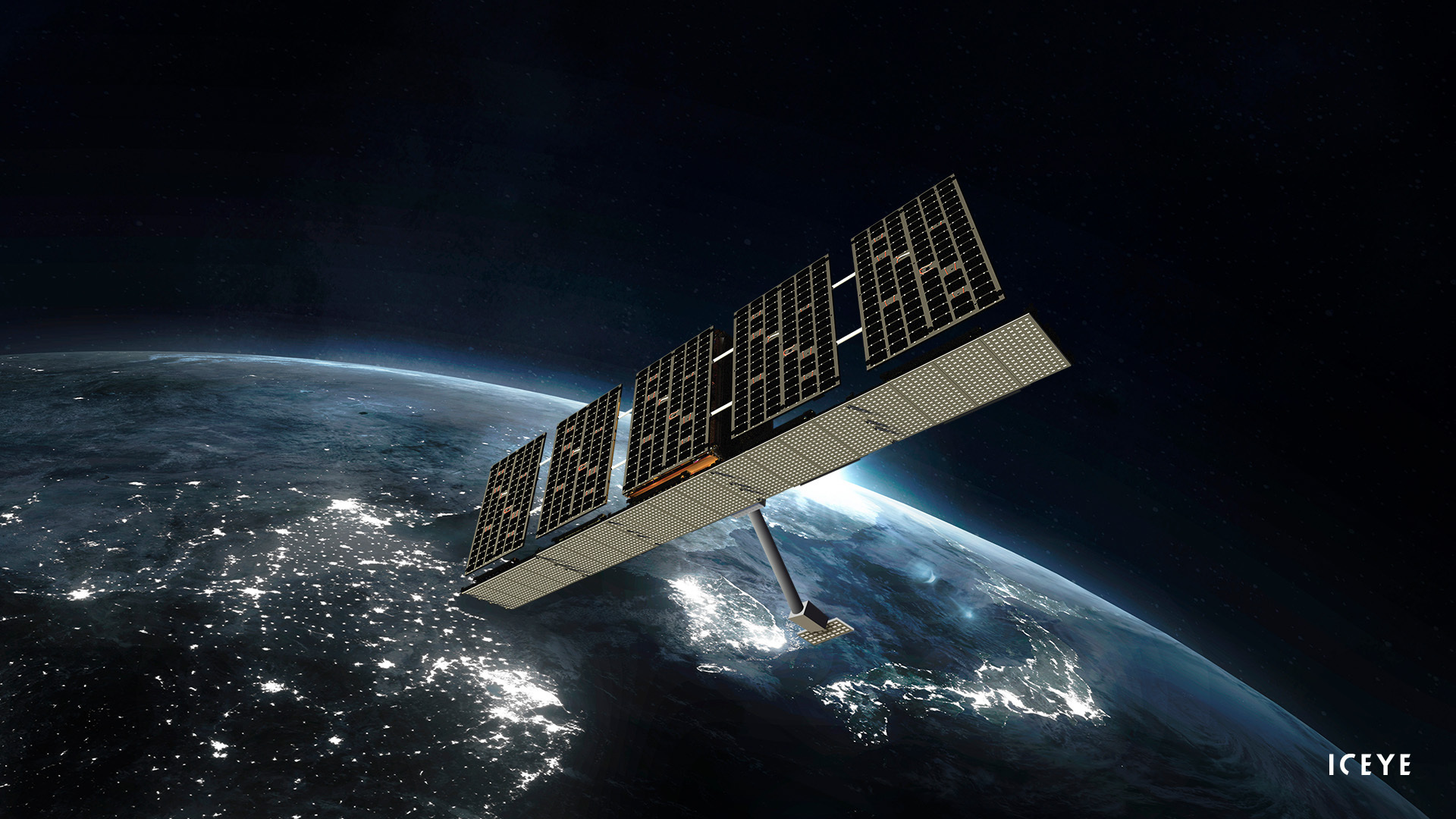
ICEYE builds and operates the world's largest synthetic aperture radar (SAR) satellite constellation, giving governments and organisations continuous, all-weather monitoring of any location on Earth. Its sovereign satellite systems have already been deployed to seven European governments.
FROM TWO STUDENTS TO A GLOBAL SAR CONSTELLATION
Rafał Modrzewski (Polish) and Pekka Laurila (Finnish) founded ICEYE in 2014 as a spin-off of Aalto University's Radio Science and Engineering department. In September 2015 the European Commission awarded ICEYE €2.4m under the Horizon 2020 SME Instrument, to prove that radar could be made small enough to fly on a microsatellite. Ten weeks later Lifeline Ventures joined the company's first venture round, a $2.8 million Series A led by True Ventures. Lifeline is still on the cap table today. Since then the company has been backed by numerous growth funds and corporates including Ilmarinen (Finnish pension fund), who backed ICEYE in 2025 as part of a €150 million Series E led by General Catalyst, which valued the company at €2.4 billion. Varma, Keva, Solidium and Tesi invested alongside it. Ilmarinen returned in the Series F announced in June 2026: a €450 million primary raise co-led by General Atlantic and Scaleup Europe managed by EQT, (the European Commission's €5 billion growth vehicle) making its first investment. Combined with a secondary placement, total proceeds passed €1 billion and the valuation passed €10 billion, making ICEYE Finland's third decacorn.
The company has launched more than 60 satellites, is producing 50 this year, and is scaling toward 100 per year by 2028, roughly one new satellite every week.
BUILDING EUROPE'S SOVEREIGN SPACE INFRASTRUCTURE
ICEYE delivered Poland's national military satellite system within 12 months, one of the fastest sovereign space deployments in history. Its joint venture with Rheinmetall won a €1.7 billion gross contract from the German armed forces, running to 2030 with extension options, the company's largest to date.
THE FUNDING STORY
ICEYE more than doubled revenue year over year, crossing €250 million in 2025 with EBITDA above €100 million and a contracted backlog above €1.5 billion. It is targeting €1 billion of revenue in 2027. On the day the Series F was announced, the Finnish government put Finnish ownership of ICEYE at around 12%.


WHAT THIS SHOWS
Every link mattered. A European grant took the risk no commercial investor would price in 2015. A small Finnish seed fund took the risk that the technology would find a customer. Growth investors funded the factory.
Institutional investors funded scale. Remove any one of them and the company is either smaller or not European. Institutions did not need to be early. Pension and state capital entered in year ten, when satellites were in orbit, governments were the customers and the backlog was contracted.
Value came back before any exit. Both recent rounds carried a secondary placement alongside the new money, which is how Series F proceeds reached €1 billion. Shareholders could realise value without waiting for a listing.
The value stayed in Finland. Finnish pension funds, state investors and venture funds now hold around 12% of a company valued above €10 billion, built in Espoo.