The global market, and how Europe and the U.S. stack up
After years of speculation, quantum technology is becoming a market to watch. Venture funding into quantum startups hit around $2 billion in 2024, up roughly 50% year-on-year, and governments worldwide have announced tens of billions in funding commitments to win this space race of computing. What does this mean for investors and innovators? Below we dive into the current state of the quantum tech market as of November 2025: from transatlantic investment trends to breakout segments, key deals, government moves, ecosystem maturity, real-world traction, and where VCs should place their next bets.
A Macro view: quantum's market moment in late 2025
The quantum technology ecosystem in 2025 is small but rapidly growing and strategically critical. Quantum includes three sets of technologies: computing, communication, and sensing.
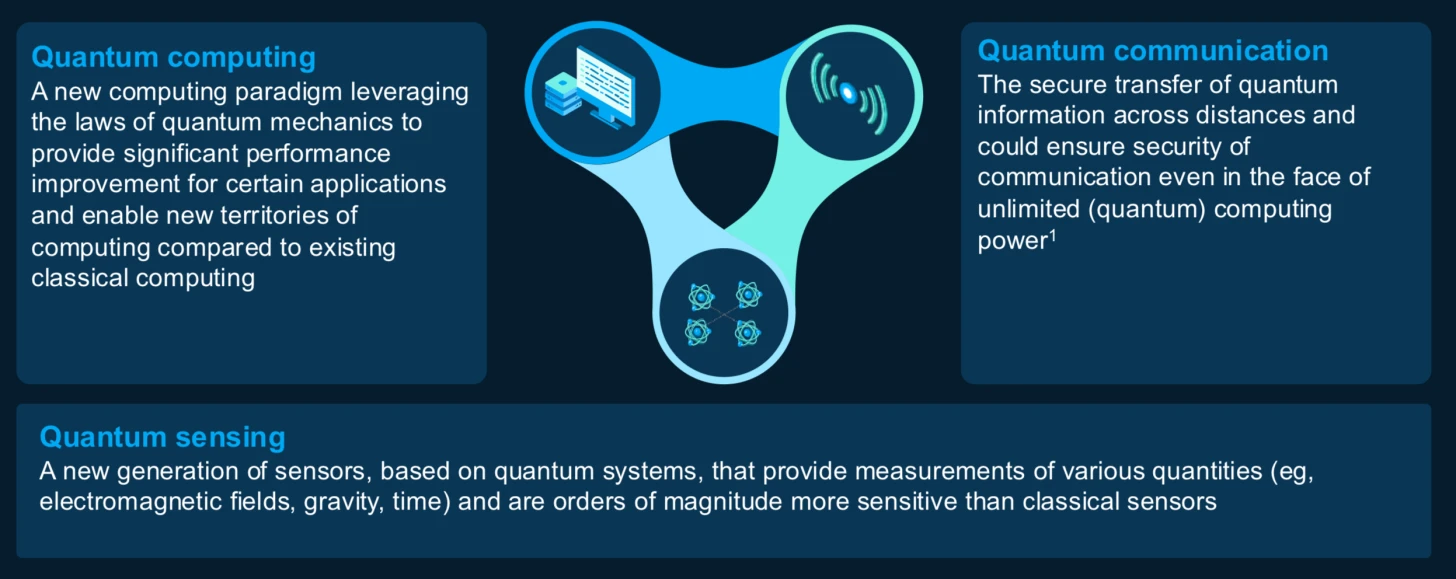
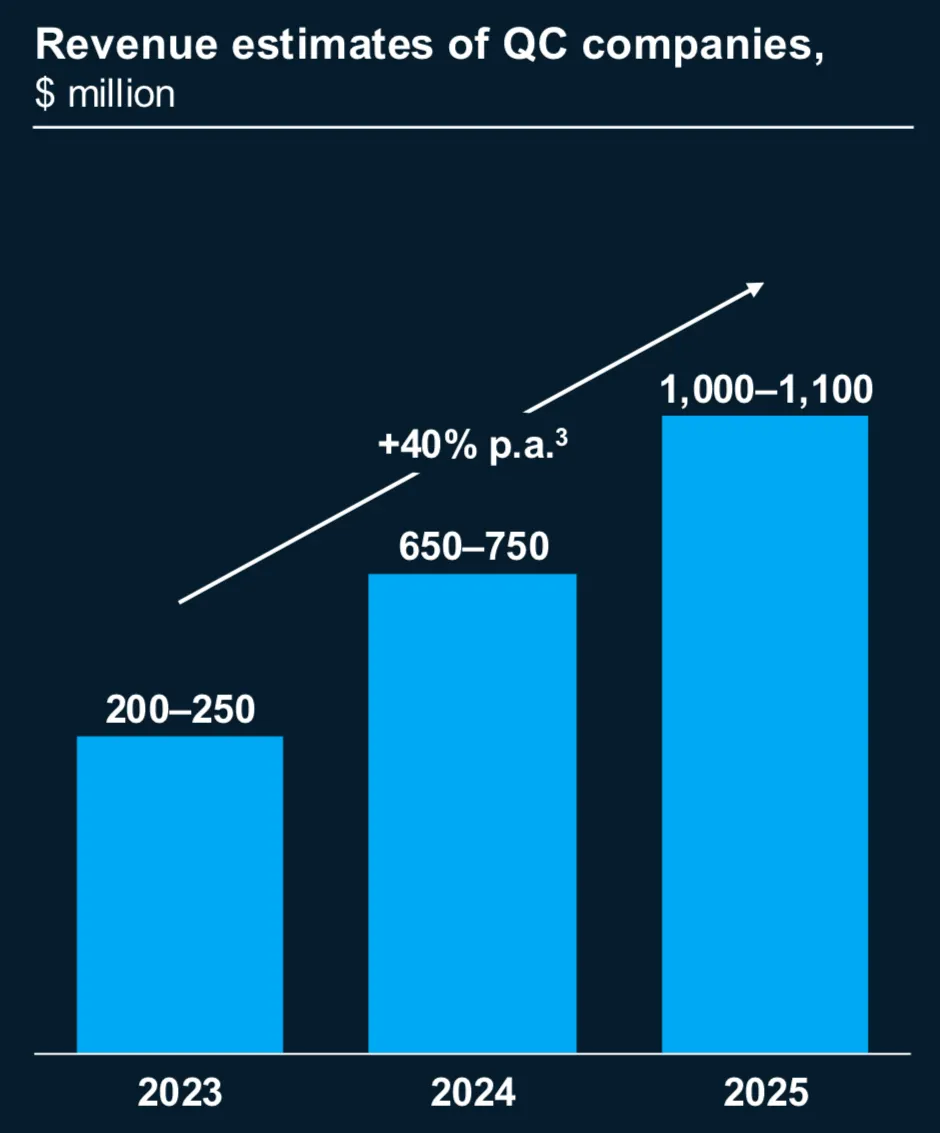
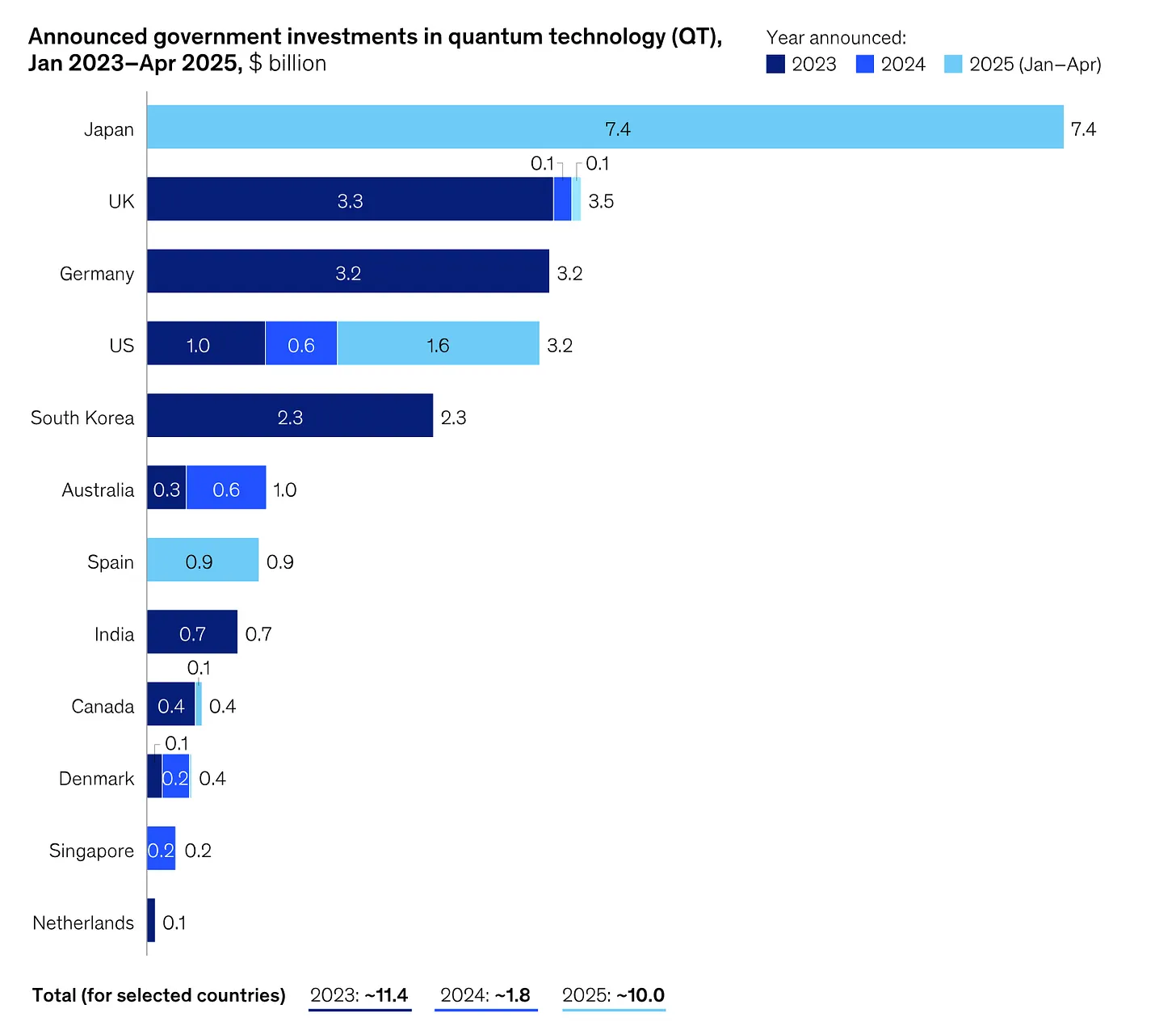
Global revenue from quantum computing remains modest, on the order of a few hundred million dollars annually, but it is expected to surpass $1 billion in 2025 as early customers pay for cloud access and pilot programmes. Both policymakers and investors see quantum tech as a key future driver of economic and security advantage. Governments have collectively committed over $42 billion to quantum R&D and infrastructure, with China, the U.S., Europe, and others treating it as a strategic priority.
🔗 Why all the fuss?
Because in the long run, quantum tech promises to unlock enormous value. Quantum computers might eventually solve problems intractable for classical machines, while quantum communications could enable unhackable networks, and quantum sensors could bring unprecedented precision to navigation, imaging, and timing. In short, quantum is no longer science fiction; it is a nascent market transitioning from lab research to real-world development, backed by a quickly maturing ecosystem of startups.
VC investment trends: hype and acceleration
After the 2019 to 2021 hype and a cautious 2022, funding into quantum startups rebounded: global investment jumped from $1.3bn in 2023 to $2.0bn in 2024, around 50% year on year.
- That surge was highly concentrated: PsiQuantum ($624.6m) and Quantinuum ($300m) together made up around $925m, almost half of all 2024 deal value.
- As a result, the U.S. captured ~78% of total quantum startup funding in 2024, with the rest split across Australia, the UK, the EU and Israel. (Quantum Technology Monitor 2025, McKinsey).
Investors are shifting away from scaling mid-life startups towards two ends: emerging companies under 4 years old and mature companies over 8 years old, explicitly favouring validated tech and clearer paths to revenue.
- Investors want IP, traction and a credible edge over classical.
- The high-profile case of Zapata Computing – which attempted a $190M reverse-merger and then ceased operations in 2024 – is now the go-to reminder that not every quantum story survives just on narrative.

- We are seeing consistent private funding and surge of public capital.
🌱 New founders keep entering, especially in Europe and Asia. New quantum startup creation rose 46% in 2024, with 19 companies founded vs 13 in 2023. The EU produced 8 of those 19 new startups and Asia 5, reflecting Europe’s strategy of seeding many spin-outs from its research base and Asia’s rapid catch-up.
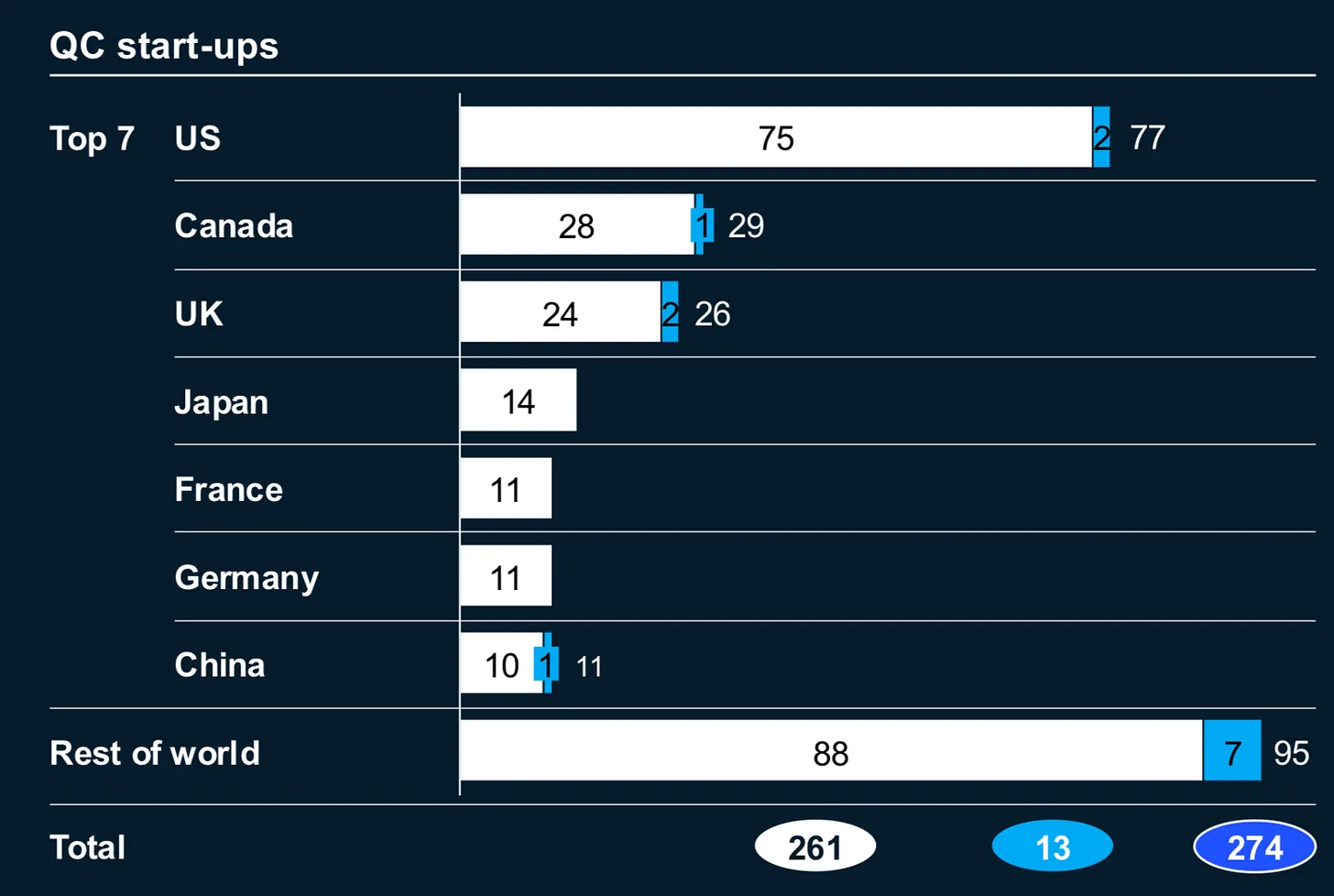
In sum, the last 12 to 24 months look like a shake-out and scale-up phase, where capital is flowing back in, but into fewer, stronger players, while a new cohort of EU and Asian startups appears at the early stage.
What is happening with quantum? Computing, communication, sensing, and security
1. Quantum computing
Quantum computing companies generated $650 to 750m in revenue in 2024 and are expected to surpass $1bn in 2025, mostly from cloud access, pilots and research contracts rather than at-scale production use. Quantum computing attracts the majority of quantum tech investment: about 60 to 65% of global quantum tech VC dollars flow into QC startups, especially hardware builders.
Nvidia's new Accelerated Quantum Research Center in Boston and DGX Quantum programme explicitly target accelerated quantum supercomputers that integrate quantum hardware with AI and HPC systems, signalling that quantum as an accelerator will define the next 5 to 10 years.
.webp)
2. Quantum communication and sensing
The quantum communication market is still small but scaling fast: estimates put it at around $1 to 1.2bn in the mid-2020s, with forecasts in the low tens of billions, $20bn+, by 2035 on 30%+ CAGR, driven by quantum key distribution and secure links.
Governments are the anchor customer: public entities represented roughly 62 to 66% of quantum communication spending in 2023, with telecom and cybersecurity players expected to take a larger share by 2035 as products mature. Quantum sensing is moving fastest toward real-world use. NATO and defence labs see quantum sensors as key for positioning, navigation and timing.

3. Quantum cybersecurity
A powerful future quantum computer could crack today's main encryption methods, RSA and ECC, so data we send over the internet, in banking or critical infrastructure would no longer be safe. On top of that, quantum tech can also improve security, quantum key distribution and better random number generators being the leading examples, which governments and telcos are already testing in pilot networks.
Looking ahead: what should we expect?
As we head into 2026, the smart quantum bets are not just moonshot computers but everything that makes the stack usable and safe.
There is space for software, middleware and tooling, SDKs, compilers, cloud APIs, error-correction, plus quantum sensing, which defence and research agencies already call the most mature quantum technology for GPS-denied navigation, underground mapping and next-generation medical and climate instruments.
The U.S. leans into big commercial bets and deep corporate and VC pockets, Europe is building a broad base of spin-outs, grants and specialist funds, and Asia, especially Japan and China, is ramping fast with multibillion-dollar national programmes.
The winning portfolios will be the ones that bridge the gaps: backing cross-border teams, plugging into consortia and accelerators, and using abundant public funding to de-risk hard science while pushing toward concrete use-cases.
First appeared in our newsletter, November 2025.