The consumer economy is financialising fast
The global consumer economy is currently undergoing a structural transformation characterised by the financialisation of everything: a phenomenon where traditional consumption is replaced by speculative engagement with high-velocity digital assets.
A useful frame for what is happening: consumer tech is moving from selling products to selling dopamine-priced exposure to outcomes. Not ownership, not utility, just the feeling of being in the game, with instant feedback and a constant sense of possibility. Crypto was the early prototype, but the same behavioural engine now runs through trading apps, sports betting, and prediction markets. That is also why this is starting to look like a real consumer category VCs can underwrite.
US: prediction markets are scaling like a consumer-fintech category
Kalshi is the clearest datapoint that this is no longer niche. In November 2025, Kalshi hit around $5.8bn in monthly trading volume (MarketWatch via Morningstar), and the mix matters: by September 2025, MarketWatch reported $2.86bn monthly volume with $2.56bn coming from sports alone.

Then the "this is consumer now" signal: the Financial Times reports Kalshi's user base grew from 600,000 to 5.1 million within a year (FT). That kind of adoption curve is what makes VCs stop arguing whether something is investment or gambling and start treating it like distribution infrastructure.
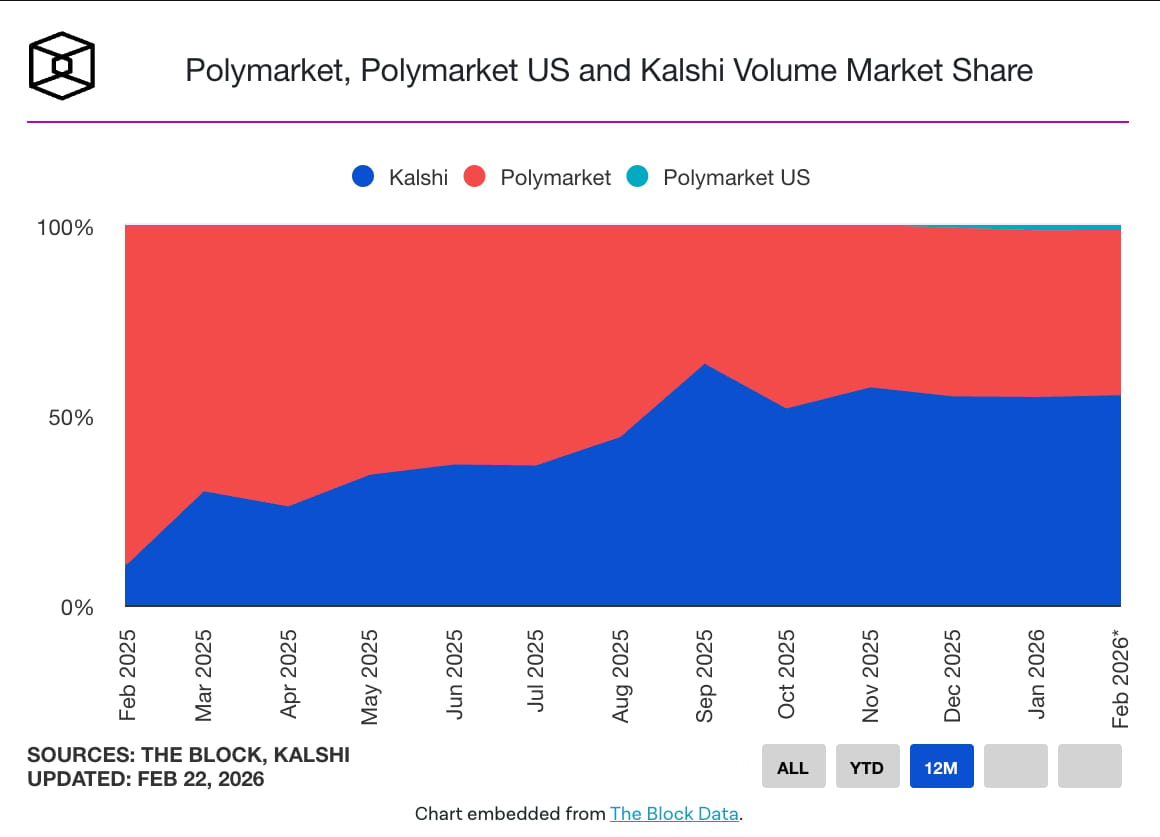
Even more telling: the FT also estimates Kalshi's annualised sports-trading revenue at around $1.3bn, and notes Kalshi's 2026 Super Bowl trading volume surpassed $1bn. That is sportsbook-scale behaviour, just wearing a different regulatory outfit.
What about Polymarket?
Polymarket volume estimates differ by dashboard and methodology. Some industry dashboards report Polymarket's November 2025 monthly volume at more than $3.7bn (Sportsbook Review), while another tracker puts the same month at more than $1.87bn (The Block).

Institutionalisation: ICE effectively blessed prediction markets as data infrastructure
In October 2025, Intercontinental Exchange, the NYSE owner, announced it would invest up to $2bn in Polymarket at around $8bn valuation pre-investment, and crucially ICE would become a global distributor of Polymarket's event-driven data (ICE). The FT framed this as part of Polymarket's path toward mainstream financial integration, also noting Polymarket's 2025 acquisition of QCX and QC Clearing for $112m as a potential route back into the US regulatory perimeter (FT).
Regulation might not be the risk. It might be the product, and the moat
This category is scaling inside a jurisdictional knife-fight:
- Wired reports Kalshi is facing 19 lawsuits, and predicts a prolonged conflict over whether these contracts are federally regulated derivatives or state-regulated gambling (Wired).
- The AP reports the CFTC has backed Kalshi and Polymarket against state attempts to ban them, signalling a meaningful policy posture shift (AP).
- The Guardian captures the "lines have been blurred" framing: platforms say event derivatives, states say unlicensed gambling, and many expect it could end up at the Supreme Court level (Guardian).
Europe's landscape: Poland as a case study where demand leads
Poland is the cleanest European proof that demand beats policy. If the US is the regulated frontier, where the market grows and the winners tend to be licensed, Poland is the opposite: a country with intense appetite, tightly constrained legal supply, and a tax regime that makes the legal path feel expensive, friction-heavy, or simply unavailable. That triangle does not reduce gambling. It re-routes it. In that world, the shadow market does not sit at the edges; it becomes the real market, because it offers the product people actually want: seamless mobile access, broader selection, and fewer constraints.
An EY analysis, commissioned by the Polish Graj Legalnie association, estimates illegal online casino operators generated around PLN 25.9bn in turnover in 2023, and puts lost gaming tax revenues at around PLN 519m the same year (Graj Legalnie).
The policy setup matters here. Poland's framework is unusually tight via monopoly structure; the report notes a state monopoly for online casinos exists only in Poland, Finland, and Austria. In practice, that combination of high demand and constrained legal supply is exactly how shadow markets become the real market.
And taxation adds fuel. Poland's Gambling Act applies a 12% tax on betting, with total stakes as the base, per SBC News' summary of the legal framework (SBC News). Meanwhile, the personal winnings tax fight is politically live: in December 2025, President Karol Nawrocki vetoed a proposal to raise the winnings tax from 10% to 15% (iGamingBusiness).
What are the implications for consumers?
The health risk is increasingly notable. The underlying psychological mechanism in all these platforms and new forms of attention is variable ratio reinforcement. The impacts are already showing: according to data from the Institute of Psychiatry and Neurology, 31% of people who speculate with cryptocurrencies show symptoms of addiction, and 86% of that group simultaneously engage in other forms of gambling. In the case of Poland, nearly one in three citizens gambles, spending an average of approximately PLN 5,750 per year.
What VCs think: momentum is the moat
This is not just a betting story. It is directly linked to the consumer distribution story. a16z partner Bryan Kim's thesis is explicit: in consumer AI, traditional moats decay faster because underlying models and infrastructure are widely available and shift rapidly. What matters is velocity: launch speed, distribution, and mindshare capture (a16z). Especially in an economy where attention span is short and dopamine controlled.
Kim describes AI startups as a flock blasted into the sky in quick succession; most will not gain enough lift, but the ones that flap hardest, shipping and iterating constantly, create distance from the pack.
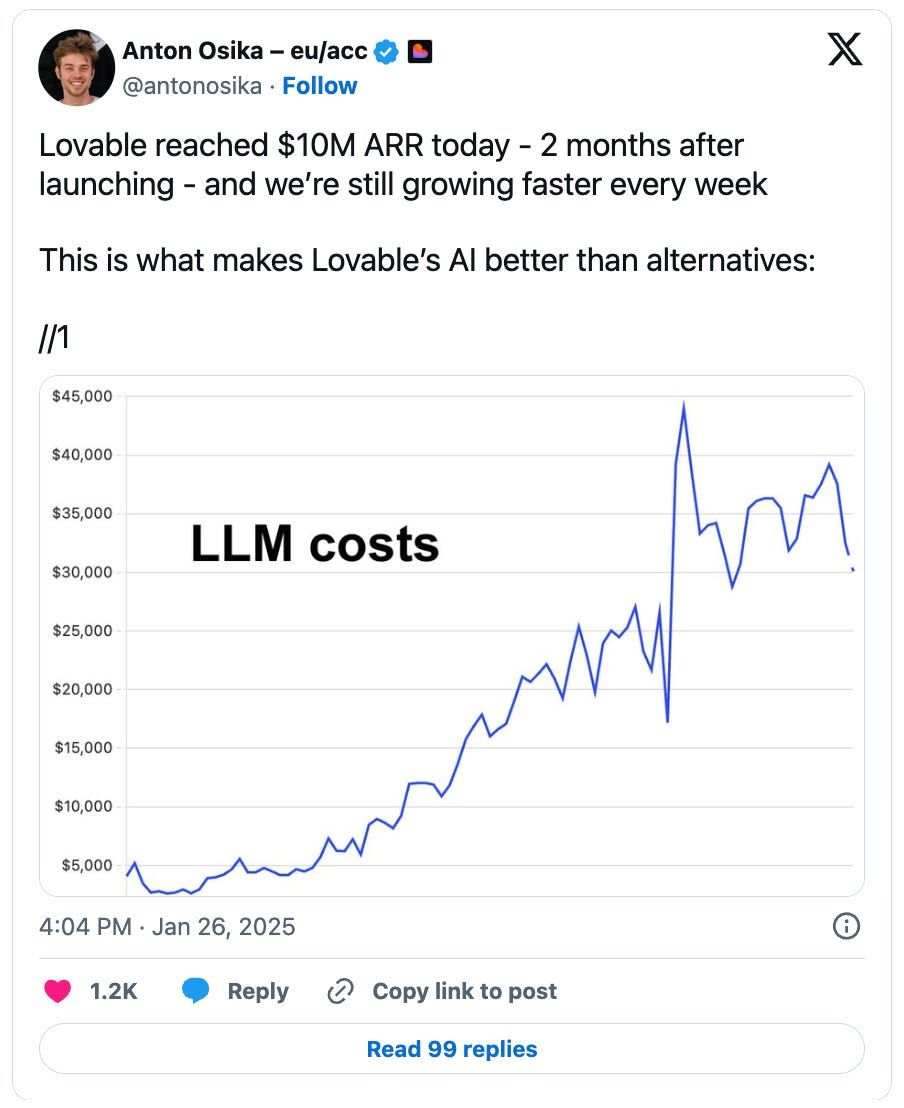
The same mechanics powering prediction markets and gamified speculation, fast feedback loops, social virality, scoreboards and winner-take-attention dynamics, now show up in go-to-market: build in public, high-frequency shipping, distribution-first. Lovable, Bolt, Krea and others have embraced this approach, regularly posting updates on everything from revenue benchmarks to daily active users to unsuccessful experiments.
First appeared in our newsletter, February 2026.